
7 Signs You Should See a Vascular Surgeon in Dubai Before Symptoms Get Worse
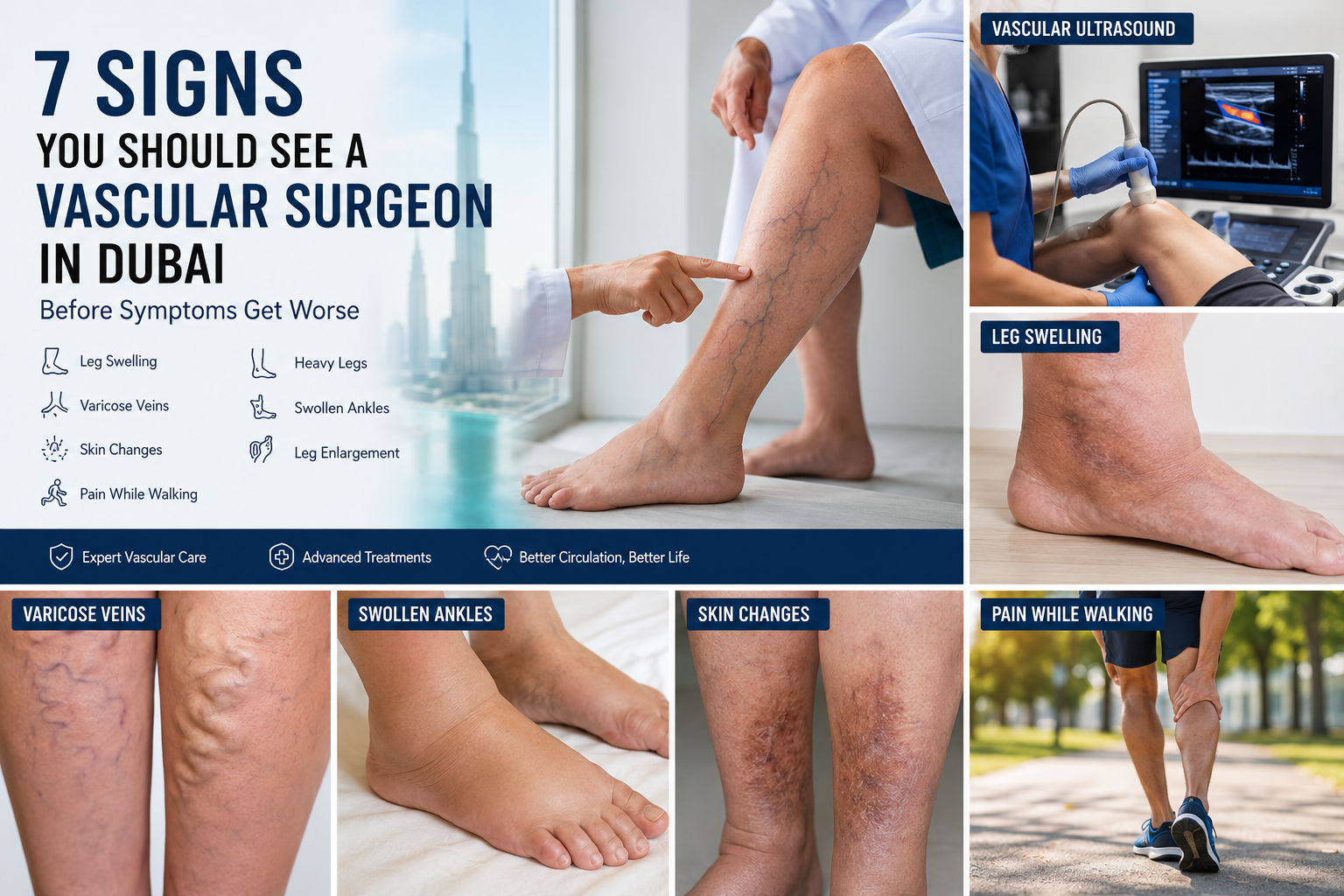
There is a common assumption that vascular conditions announce themselves dramatically. Many people imagine severe pain, sudden complications, or symptoms that are impossible to ignore.
Most vascular problems begin quietly.
A little swelling around the ankles after a long day. A feeling of heaviness in the legs that seems harmless at first. Visible veins that become more noticeable over time. Mild discomfort while walking that gradually becomes part of daily life.
Because these Lipedema Symptoms Treatments in Dubai often develop slowly, they are easy to dismiss. People attribute them to aging, weight fluctuations, long working hours, or lack of exercise. Months pass. Sometimes years.
This is one of the reasons vascular disorders are frequently diagnosed later than they should be.
The vascular system plays a vital role in maintaining healthy circulation throughout the body. When blood flow is disrupted or the veins and lymphatic system stop functioning efficiently, symptoms can affect everything from mobility and comfort to long-term health outcomes.
Many vascular conditions respond best when they are identified before complications develop.
At The Lipo Lab, we regularly meet patients who spent years searching for answers to symptoms they believed were normal. Understanding the warning signs can help you recognize when it may be time to consult a vascular surgeon in Dubai and take proactive steps toward protecting your health.
Understanding the Role of a Vascular Surgeon
Before discussing the warning signs, it helps to understand what a vascular surgeon actually does.
A vascular surgeon specializes in diagnosing, managing, and treating conditions that affect the body’s network of blood vessels and lymphatic structures.
Many people assume vascular surgeons only treat varicose veins or perform complex surgical procedures. In reality, their role extends far beyond that.
A vascular specialist may evaluate:
- Chronic leg swelling
- Poor circulation
- Varicose veins
- Spider veins
- Peripheral artery disease
- Deep vein thrombosis
- Lymphedema
- Lipedema-related symptoms
- Chronic venous insufficiency
- Leg pain associated with vascular disorders
The goal is not simply to treat symptoms but to identify their underlying cause and develop a personalized treatment strategy.
Modern vascular care often includes non-surgical therapies, minimally invasive procedures, lifestyle guidance, and long-term monitoring depending on the patient’s needs.
Why Vascular Conditions Are Frequently Misdiagnosed
One of the biggest challenges in vascular medicine is that symptoms often overlap with other conditions.
A patient experiencing swollen legs may assume they are carrying extra weight. Another person with heavy legs may blame fatigue or lack of exercise. Someone with recurring ankle swelling may believe it is simply caused by standing too much during the day.
These assumptions are understandable.
Unfortunately, they can also delay diagnosis.
Many vascular conditions develop gradually and mimic other common health concerns. In some cases, patients are treated for symptoms while the root cause remains undiscovered.
For example, women living with lipedema frequently spend years trying different diets and exercise programs before learning that their symptoms stem from a chronic medical condition rather than lifestyle factors.
Patients seeking answers for disproportionate fat accumulation and persistent swelling often benefit from specialized evaluation and Lipedema Treatment in Dubai, particularly when conventional weight-loss strategies have failed to provide results.
Recognizing the early warning signs is often the first step toward obtaining an accurate diagnosis.
Persistent Leg Swelling
Leg swelling is one of the most common reasons patients seek vascular evaluation.
While temporary swelling can occur after travel, prolonged standing, or intense physical activity, persistent swelling deserves closer attention.
Healthy circulation depends on an intricate balance between blood vessels and lymphatic drainage. When this balance becomes disrupted, fluid can accumulate in the lower extremities.
Initially, swelling may appear mild.
Patients often notice:
- Tight-fitting shoes
- Sock marks around the ankles
- Puffiness in the feet
- Swelling that worsens later in the day
- Temporary improvement after elevating the legs
Over time, symptoms may become more noticeable and increasingly difficult to ignore.
Several vascular and lymphatic conditions can contribute to persistent swelling, including:
Chronic Venous Insufficiency
This occurs when veins struggle to return blood efficiently from the legs to the heart.
As pressure builds within the veins, fluid may leak into surrounding tissues, causing swelling and discomfort.
Lymphedema
Lymphedema develops when the lymphatic system cannot effectively transport fluid.
This results in fluid accumulation that often causes chronic swelling, heaviness, and skin changes.
Lipedema
The combination of fat accumulation and fluid retention can significantly affect comfort and mobility.
The important point is this: persistent swelling is rarely something that should be ignored.
If swelling becomes a regular part of your daily life, consultation with a vascular specialist can help determine whether circulation or lymphatic dysfunction is contributing to your symptoms.
Heavy, Aching, or Tired Legs
Many patients describe this symptom in remarkably similar ways.
“My legs feel exhausted.”
“It feels like I’m carrying extra weight.”
These descriptions may seem vague, but they often point toward underlying vascular issues.
Healthy veins rely on a system of valves and muscle contractions to move blood upward against gravity. When circulation becomes compromised, blood can begin pooling in the lower extremities.
The result is a sensation of heaviness that may worsen throughout the day.
Common symptoms include:
- Aching discomfort
- Leg fatigue
- Throbbing sensations
- Pressure in the calves
- Reduced endurance during physical activity
Many people mistakenly attribute these sensations to aging or general fatigue.
While those factors may contribute, persistent heaviness should not automatically be considered normal.
A vascular assessment can help determine whether circulation issues are affecting blood flow and contributing to discomfort.
Visible Varicose Veins
Varicose veins are among the most recognizable signs of vascular disease.
These enlarged, twisted veins typically appear beneath the surface of the skin and are most commonly found in the legs.
For some individuals, varicose veins remain largely cosmetic.
For others, they are accompanied by symptoms that affect daily life.
Patients may experience:
- Leg pain
- Burning sensations
- Itching
- Swelling
- Cramping
- Heaviness
- Tenderness
The underlying issue often involves weakened vein walls or malfunctioning valves that allow blood to pool rather than circulate efficiently.
Without treatment, symptoms may gradually worsen over time.
Many patients delay seeking medical attention because they believe varicose veins are purely cosmetic.
In reality, visible veins can provide valuable insight into overall vascular health.
Early evaluation can help determine whether treatment is necessary and prevent progression of more significant venous disease.
Recurring Swollen Ankles
Swollen ankles deserve special attention because they are one of the most commonly overlooked symptoms in vascular medicine.
People frequently assume ankle swelling is simply a consequence of standing too long, working long hours, or traveling.
While these factors can contribute to temporary swelling, recurring ankle swelling often signals an underlying problem.
The ankles are particularly vulnerable because gravity naturally encourages fluid accumulation in the lower extremities.
When circulation or lymphatic drainage becomes impaired, fluid may collect around the ankles and lower legs.
Patients commonly report:
- Tightness around the ankles
- Difficulty fitting into shoes
- Puffiness that worsens throughout the day
- Recurring swelling after periods of activity
- Visible indentation after removing socks
Several conditions may contribute to these symptoms.
These include:
- Venous insufficiency
- Lymphatic dysfunction
- Lipedema
- Chronic circulation problems
Individuals experiencing ongoing ankle swelling often seek specialized Swollen Ankles Treatment in Dubai to identify the root cause and develop a personalized treatment strategy.
The earlier these issues are identified, the easier they are often to manage.
Why Early Action Matters
One of the biggest misconceptions surrounding vascular health is the belief that symptoms must become severe before medical attention is necessary.
In reality, early intervention frequently produces the best outcomes.
When vascular conditions are diagnosed early, patients often benefit from:
- More treatment options
- Better symptom control
- Improved circulation
- Reduced risk of complications
- Enhanced mobility
- Better quality of life
Waiting for symptoms to worsen may allow underlying conditions to progress, making treatment more complex later on.
The body often provides warning signs long before serious complications develop.
The key is recognizing those signals and responding appropriately.
In the second part of this guide, we will explore three additional warning signs that should never be ignored, including skin changes, pain during walking, and disproportionate leg enlargement. We will also discuss the differences between lipedema, lymphedema, and venous disease, explain how vascular conditions are diagnosed, and review treatment options available in Dubai.
Skin Changes in the Lower Legs
The skin often provides valuable clues about vascular health.
Unfortunately, many people overlook these signs because they develop gradually. A slight discoloration around the ankles. Skin that feels tighter than usual. Areas that appear dry, shiny, or irritated without a clear explanation.
While skin changes may seem like a dermatological concern, they are frequently linked to underlying circulation problems.
When blood flow becomes compromised, tissues may not receive adequate oxygen and nutrients. Similarly, chronic fluid accumulation can place stress on the skin and surrounding structures.
Skin Discoloration
Brown, reddish, or darkened patches around the lower legs and ankles may indicate chronic venous insufficiency.
These changes often develop slowly and are frequently mistaken for simple pigmentation issues.
Tight or Shiny Skin
Fluid accumulation can cause the skin to appear stretched or unusually shiny.
This is particularly common in patients experiencing chronic swelling.
Thickened Skin
Long-standing vascular or lymphatic disorders can alter skin texture, causing it to become thicker or firmer over time.
Slow-Healing Wounds
Poor circulation may interfere with the body’s ability to heal effectively.
Minor cuts or skin injuries that take an unusually long time to heal should never be ignored.
Persistent Irritation
Chronic inflammation associated with vascular disorders may cause itching, irritation, or discomfort in affected areas.
These changes often indicate that circulation has been compromised for an extended period.
The earlier they are evaluated, the greater the opportunity to prevent further progression.
Pain While Walking
Leg pain is frequently associated with muscles, joints, or orthopedic conditions.
However, not all leg pain originates from the musculoskeletal system.
One of the hallmark symptoms of vascular disease is discomfort that develops during physical activity and improves with rest.
Patients often describe:
- Cramping in the calves
- Tightness in the legs
- Burning sensations
- Pain after walking certain distances
- Reduced exercise tolerance
- Fatigue during routine activities
These symptoms may indicate reduced blood flow to the lower extremities.
Understanding Peripheral Artery Disease
Peripheral artery disease (PAD) occurs when arteries become narrowed, limiting blood supply to the limbs.
As a result, muscles may not receive sufficient oxygen during physical activity.
The body responds with pain or discomfort as a warning signal.
Many individuals mistakenly attribute these symptoms to aging or lack of fitness.
Unfortunately, delaying evaluation can allow circulation problems to progress.
A vascular surgeon can assess blood flow, identify underlying issues, and recommend appropriate treatment strategies.
Disproportionate Leg Enlargement
Among all the symptoms discussed in this article, disproportionate leg enlargement is perhaps one of the most misunderstood.
Many women spend years trying to understand why their lower body appears significantly larger than their upper body despite healthy lifestyle habits.
Dieting may reduce waist measurements.
Exercise may improve overall fitness.
Yet the legs remain disproportionately enlarged.
This pattern often suggests that something more complex is occurring.
Lipedema: The Frequently Overlooked Condition
Lipedema is a chronic condition involving abnormal fat accumulation, most commonly affecting:
- Hips
- Thighs
- Buttocks
- Lower legs
- Sometimes the arms
Unlike ordinary body fat, lipedema tissue typically resists traditional weight-loss methods.
Common symptoms include:
- Symmetrical enlargement
- Easy bruising
- Tenderness
- Pain
- Heaviness
- Swelling
- Progressive lower-body enlargement
Many patients report years of frustration before receiving an accurate diagnosis.
Because lipedema remains underrecognized, women are often told they simply need to lose weight.
This misunderstanding can delay appropriate care and create unnecessary emotional distress.
Individuals experiencing these symptoms may benefit from consulting a Lipedema Specialist in Dubai for comprehensive evaluation and treatment planning.
Understanding the Difference Between Lipedema, Lymphedema, and Venous Disease
One reason vascular disorders are frequently misdiagnosed is that multiple conditions share similar symptoms.
Swelling, heaviness, discomfort, and leg enlargement can occur in several different disorders.
Understanding the differences is essential.
Lipedema
Lipedema primarily involves abnormal fat accumulation.
Key characteristics include:
- Symmetrical enlargement
- Painful fat deposits
- Easy bruising
- Resistance to weight loss
- Predominantly affects women
Patients often seek care through a dedicated Lipedema Center in Dubai because diagnosis requires specialized expertise.
Lymphedema
Lymphedema occurs when lymphatic drainage becomes impaired.
Common symptoms include:
- Persistent swelling
- Tissue firmness
- Skin changes
- Heaviness
- Increased risk of infections
Unlike lipedema, lymphedema primarily involves fluid accumulation rather than abnormal fat distribution.
Patients experiencing these symptoms often require specialized Lymphedema Treatment in Dubai to manage swelling and preserve mobility.
Chronic Venous Insufficiency
Venous insufficiency develops when veins struggle to return blood effectively to the heart.
Typical symptoms include:
- Swelling
- Varicose veins
- Leg heaviness
- Skin discoloration
- Aching discomfort
Although these conditions may appear similar, treatment strategies differ significantly.
Accurate diagnosis is therefore essential.
How Vascular Conditions Are Diagnosed
Many patients are surprised to learn how comprehensive vascular evaluations can be.
Diagnosis involves far more than simply observing visible symptoms.
A vascular surgeon typically begins by reviewing:
Medical History
Understanding symptom patterns provides valuable insight into potential causes.
Questions may address:
- Family history
- Previous surgeries
- Lifestyle factors
- Existing medical conditions
- Duration of symptoms
Physical Examination
A detailed examination helps identify:
- Swelling patterns
- Vein abnormalities
- Skin changes
- Areas of tenderness
- Circulatory concerns
Ultrasound Assessment
Vascular ultrasound is one of the most valuable diagnostic tools available.
This non-invasive imaging method allows specialists to evaluate blood flow and identify abnormalities within veins and arteries.
Lymphatic Assessment
When swelling suggests lymphatic dysfunction, additional evaluation may be recommended.
The objective is always the same: identify the root cause rather than merely treating visible symptoms.
Treatment Options Available in Dubai
Modern vascular medicine offers a wide range of treatment options.
Conservative Treatments
Many patients benefit from non-surgical management.
Common approaches include:
Compression Therapy
Compression garments support circulation and help manage swelling.
Lifestyle Modifications
Simple changes can often improve symptoms significantly.
Examples include:
- Regular movement
- Weight management
- Leg elevation
- Improved hydration
- Exercise programs
Manual Lymphatic Drainage
This specialized therapy helps encourage lymphatic flow and reduce fluid accumulation.
Minimally Invasive Procedures
Advances in vascular medicine have dramatically expanded treatment options.
Many conditions can now be treated using minimally invasive techniques that require little downtime.
These approaches may be recommended for:
- Varicose veins
- Venous insufficiency
- Certain circulation disorders
Specialized Lipedema Care
Patients diagnosed with lipedema often require a comprehensive treatment strategy.
This may involve:
- Compression therapy
- Nutritional support
- Exercise guidance
- Symptom management
- Advanced treatment options when appropriate
Individuals seeking specialized care often explore Lipedema Treatment in Dubai to improve comfort, mobility, and quality of life.
Why Patients Choose The Lipo Lab
At The Lipo Lab, we understand that vascular and lymphatic conditions affect more than physical symptoms alone.
Persistent swelling, discomfort, heaviness, and mobility limitations can influence every aspect of daily life.
Patients frequently arrive after months or years of uncertainty.
Many have been searching for answers.
Others have received conflicting opinions regarding their symptoms.
Our approach focuses on providing:
- Comprehensive evaluations
- Personalized treatment plans
- Advanced diagnostic assessments
- Lipedema expertise
- Lymphatic care
- Long-term support
Rather than treating symptoms in isolation, we focus on understanding the complete clinical picture.
This allows us to develop treatment strategies tailored to each patient’s unique circumstances and goals.
When considering treatment for more complex lipedema related concerns, patients are likely to consult the Best Lipedema Surgeon in Dubai for advanced expertise.
Final Thoughts
Vascular conditions rarely appear overnight.
In most cases, the body provides warning signs long before complications develop.
Persistent swelling, leg heaviness, varicose veins, swollen ankles, skin changes, pain while walking, and disproportionate leg enlargement should never be dismissed as normal without proper evaluation.
While these symptoms do not always indicate a serious condition, they deserve attention.
Early diagnosis often leads to more treatment options, better symptom control, and improved long-term outcomes.
The most important step is recognizing when your body is trying to tell you something.
If you are experiencing any of the symptoms discussed in this guide, consulting a vascular surgeon in Dubai can help identify the underlying cause and provide access to personalized treatment solutions.
At The Lipo Lab, we are committed to helping patients understand their symptoms, explore their options, and move forward with greater confidence, comfort, and long-term vascular health.
Frequently Asked Questions
When should I see a vascular surgeon in Dubai?
You should consider evaluation if you experience persistent swelling, visible veins, leg heaviness, circulation problems, recurring ankle swelling, or unexplained leg discomfort.
Can a vascular surgeon diagnose lipedema?
Yes. A vascular specialist familiar with lymphatic and vascular disorders can help identify symptoms consistent with lipedema and recommend appropriate treatment options.
Is leg swelling always related to circulation problems?
No. Swelling can result from various causes, including lymphatic dysfunction, lipedema, venous disease, and certain medical conditions. A proper assessment is necessary to determine the cause.
Are varicose veins dangerous?
While many varicose veins are not dangerous, they can indicate underlying venous insufficiency and may worsen if left untreated.
How is lipedema different from lymphedema?
Lipedema involves abnormal fat accumulation, while lymphedema primarily involves fluid retention caused by impaired lymphatic drainage.
Can vascular conditions be treated without surgery?
Yes. Many vascular conditions respond well to conservative therapies, lifestyle modifications, compression therapy, and minimally invasive treatments.
How is vascular disease diagnosed?
Diagnosis typically includes a medical history review, physical examination, circulation assessment, and vascular ultrasound imaging.
Why is early diagnosis important?
Early diagnosis allows for better symptom management, more treatment options, improved mobility, and reduced risk of complications.