
Lipedema Symptoms Treatments in Dubai: A Complete Guide to Early Diagnosis, Expert Care, and Long-Term Relief
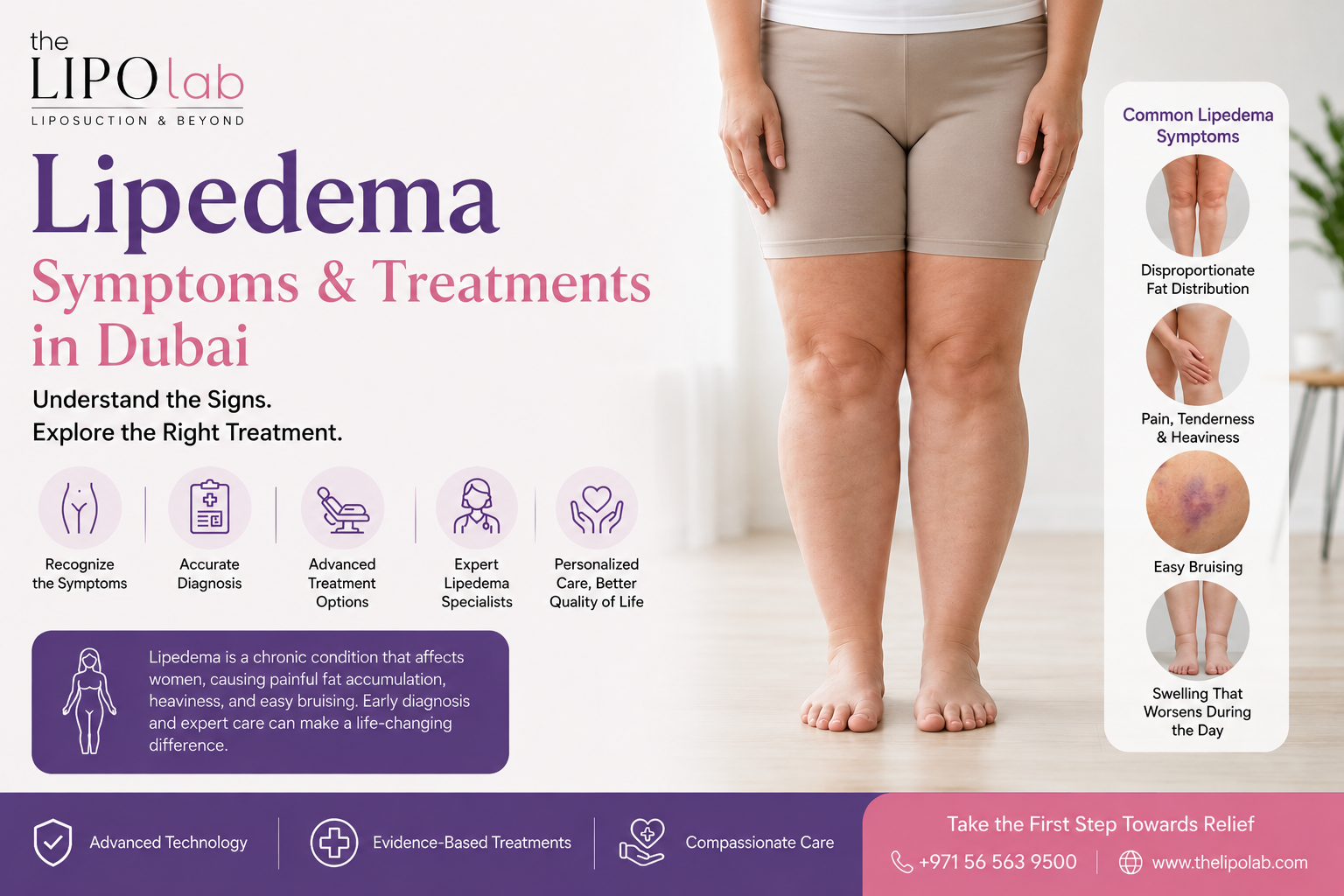
For years, Sarah believed she simply had “heavy legs.” She exercised regularly, followed healthy eating plans, and even lost nearly 15 kilograms. Friends congratulated her on her weight loss, yet one thing never changed—her legs remained disproportionately larger than the rest of her body. They felt heavy every evening, bruised easily, and became increasingly painful over time.
She blamed herself.
Perhaps she wasn’t exercising hard enough.
Maybe she needed another diet.
It wasn’t until she met a specialist that she heard a word she had never encountered before: Lipedema.
Sarah’s story is far from unique. Thousands of women live with the same symptoms for years before receiving the correct diagnosis. Because lipedema is often mistaken for obesity, lymphedema, or simple weight gain, patients frequently spend years trying solutions that were never designed to treat the actual condition.
At The Lipo Lab, we understand how emotionally and physically challenging this journey can be. Our goal is not simply to treat symptoms but to help patients understand what is happening inside their bodies and provide evidence-based treatment plans that improve both comfort and quality of life.
Whether you have recently started noticing changes in your legs or have struggled with symptoms for many years, understanding Lipedema Symptoms Treatments in Dubai is the first step toward finding lasting relief.
What is Lipedema?
Lipedema is a chronic progressive medical condition characterized by an abnormal buildup of fat beneath the skin, most commonly affecting the legs and, in many cases, the arms. Unlike ordinary body fat, lipedema fat behaves differently. It is resistant to traditional weight-loss methods such as dieting and exercise and is often accompanied by pain, tenderness, swelling, and easy bruising.
The condition almost exclusively affects women and is believed to have strong hormonal and genetic influences. Symptoms often appear or worsen during significant hormonal changes such as puberty, pregnancy, or menopause.
One of the most distinctive features of lipedema is that it usually affects both sides of the body symmetrically. For example, both legs enlarge evenly while the feet remain relatively unaffected, creating what specialists often describe as a “cuff” appearance around the ankles.
Although lipedema is becoming more widely recognized, many women continue to receive incorrect diagnoses, delaying appropriate treatment for years.
Why Lipedema is Commonly Misdiagnosed
One of the greatest challenges in treating lipedema is recognizing it in the first place.
Because enlarged legs are often associated with obesity, patients are frequently advised to lose weight without anyone investigating why the fat distribution appears unusual.
Imagine a woman who loses 20 kilograms through disciplined dieting and regular exercise. Her face becomes slimmer, her waist decreases, and her upper body changes dramatically. Yet her legs remain almost exactly the same size.
This experience is extremely common among women with lipedema.
Instead of receiving answers, many are told they simply need to work harder.
Over time, this misunderstanding can lead to frustration, anxiety, and feelings of guilt, even though the problem is not caused by a lack of effort.
Experienced specialists recognize that lipedema behaves differently from ordinary body fat and requires a completely different approach to diagnosis and management.
Understanding the Early Symptoms of Lipedema
Lipedema rarely develops overnight.
Most patients notice subtle changes long before they seek medical advice.
Unfortunately, these early symptoms are often dismissed as normal fatigue or temporary swelling.
Recognizing these warning signs can make a significant difference because earlier intervention often leads to better long-term symptom management.
1. Persistent Heavy Legs
One of the earliest complaints is a constant feeling of heaviness.
Many patients describe their legs as feeling unusually tired even after relatively little physical activity.
Walking upstairs may become increasingly uncomfortable, and standing for long periods can feel exhausting.
Unlike normal muscle fatigue after exercise, the heaviness tends to return repeatedly and often worsens as the day progresses.
2. Legs That Don’t Respond to Weight Loss
Perhaps the most frustrating symptom is the inability to reduce fat from the legs despite successful weight loss elsewhere.
Patients often notice:
- A slimmer face
- Smaller waist
- Reduced upper body measurements
while their thighs and lower legs remain disproportionately large.
This difference in fat distribution is one of the strongest clues that lipedema—not ordinary obesity may be present.
3. Easy Bruising
Many women with lipedema notice bruises appearing after very minor bumps or sometimes without remembering any injury at all.
This increased bruising occurs because the tiny blood vessels within affected tissue are more fragile than usual.
If you frequently discover bruises on your legs without understanding why, it may be worth discussing this symptom with a specialist, especially when combined with other signs of lipedema.
4. Tenderness and Pain
Healthy fat tissue is generally painless.
Lipedema fat is different.
Patients often report that even gentle pressure causes discomfort.
Simple activities such as crossing the legs, wearing tight clothing, or receiving a massage may become uncomfortable.
Some individuals describe a constant dull ache, while others experience sharp sensitivity when the affected areas are touched.
Pain levels vary between patients but tend to increase as the condition progresses.
5. Symmetrical Enlargement of Both Legs
Unlike many vascular conditions that affect one leg more than the other, lipedema usually develops symmetrically.
Both legs enlarge in a remarkably even pattern.
Commonly affected areas include:
- Hips
- Buttocks
- Thighs
- Knees
- Calves
The feet often remain unaffected during the early stages, creating a noticeable transition around the ankles.
This pattern helps specialists distinguish lipedema from several other conditions.
Symptoms That Become More Noticeable Over Time
Without proper management, lipedema may gradually progress.
Patients often notice that symptoms become more pronounced over several years.
These may include:
Increasing Leg Heaviness
Activities that once felt effortless may begin to require considerably more energy.
Walking long distances, climbing stairs, or standing for extended periods can become increasingly difficult.
Swelling Later in the Day
Many women observe that their legs feel tighter and heavier in the evening than they do in the morning.
Although swelling can improve somewhat with rest, it often returns daily.
Clothing Fits Unevenly
One frequently overlooked clue is difficulty finding clothes that fit comfortably.
For example, a patient may wear a medium-sized shirt but require extra-large trousers because of disproportionately larger hips and thighs.
This mismatch often causes frustration during shopping and may affect self-confidence.
Reduced Mobility
As symptoms progress, patients sometimes begin avoiding activities they once enjoyed.
Long walks, travel, recreational sports, or even standing during social events may become physically demanding due to discomfort and heaviness.
Emotional Effects of Living with Lipedema
The physical symptoms tell only part of the story.
Many women spend years believing they have somehow failed to lose weight properly.
They may try countless diets, intense exercise programs, and weight-loss challenges without understanding why their legs never seem to change.
This repeated disappointment often affects emotional well-being.
Some patients avoid:
- Wearing dresses or shorts
- Swimming pools
- Beaches
- Social gatherings
- Family photographs
Others withdraw from exercise altogether because movement has become painful or discouraging.
Receiving an accurate diagnosis often brings an unexpected sense of relief.
For many women, hearing that their symptoms have a medical explanation—not a personal failure can be life changing.
Lipedema is More Than a Cosmetic Concern
Because enlarged legs are visible, some people assume lipedema is simply an appearance issue.
In reality, it is a chronic medical condition that can significantly affect daily life.
Untreated lipedema may contribute to:
- Chronic pain
- Reduced mobility
- Progressive swelling
- Joint strain
- Difficulty exercising
- Emotional distress
- Reduced quality of life
Early recognition allows patients to begin appropriate treatment before symptoms become increasingly difficult to manage.
Why Early Diagnosis Matters
Imagine two women who develop the earliest signs of lipedema.
The first receives an accurate diagnosis shortly after symptoms appear. She begins conservative treatment, learns how to manage swelling, adopts supportive lifestyle habits, and receives regular follow-up care.
The second spends ten years believing she simply needs another diet. During that time, her discomfort increases, mobility declines, and the condition gradually progresses without targeted treatment.
Although every patient is different, early diagnosis generally provides more opportunities to slow progression, reduce symptoms, and improve daily comfort.
This is why persistent heaviness, unexplained tenderness, easy bruising, and disproportionate leg enlargement should never be ignored.
Understanding the Stages of Lipedema
Lipedema is generally considered a progressive condition, meaning symptoms may worsen over time if left unmanaged. However, progression varies from person to person, and early intervention can often help slow this process.
Stage 1
In the earliest stage, the skin usually appears smooth, but abnormal fat begins to accumulate beneath the surface.
Patients often notice:
- Mild heaviness
- Tenderness
- Easy bruising
- Legs that appear larger than expected
Because outward changes are subtle, many women assume the issue is simply weight gain.
Stage 2
As lipedema progresses, the skin surface may become uneven.
Symptoms often include:
- Increased pain
- More noticeable swelling
- Nodular fat deposits
- Reduced comfort during walking
Daily activities that once felt effortless may begin to require greater physical effort.
Stage 3
Larger fat deposits develop, creating significant changes in body shape.
Patients may experience:
- Pronounced leg enlargement
- Difficulty walking long distances
- Reduced mobility
- Chronic discomfort
- Joint strain
At this stage, treatment often focuses on improving function and quality of life while reducing symptoms.
Stage 4 (Lipo-Lymphedema)
Some patients eventually develop secondary lymphatic problems.
This advanced stage combines lipedema with lymphedema, causing persistent swelling that may involve the feet in addition to the legs.
Early diagnosis greatly reduces the likelihood of reaching this stage.
Lipedema vs. Obesity
One of the biggest reasons patients are misdiagnosed is that lipedema can resemble obesity.
However, there are several important differences.
| Lipedema | Obesity |
| Usually affects women | Affects both men and women |
| Symmetrical fat distribution | General body fat increase |
| Painful fat tissue | Fat usually not painful |
| Easy bruising | Bruising not typical |
| Legs often resistant to dieting | Fat usually decreases with weight loss |
| Feet often remain unaffected | Fat affects the entire body |
Many women with lipedema successfully lose weight from their upper body while their legs remain disproportionately enlarged.
This pattern should always prompt further evaluation.
Lipedema vs. Lymphedema
These two conditions are often confused because both involve enlarged legs.
However, they are different disorders.
Lipedema
- Abnormal fat accumulation
- Painful tissue
- Symmetrical enlargement
- Easy bruising
- Usually spares the feet initially
Lymphedema
- Fluid accumulation
- Often affects one limb first
- May involve the feet
- Skin changes become more obvious
- Less tenderness within fat tissue
In some patients, untreated lipedema eventually contributes to lymphatic dysfunction, creating lipo-lymphedema.
How Lipedema is Diagnosed
Unlike many medical conditions, there is currently no single blood test or scan that confirms lipedema.
Diagnosis relies on careful clinical evaluation by an experienced specialist.
At The Lipo Lab, diagnosis typically begins with a detailed consultation.
Medical History
Your specialist will ask questions such as:
- When did symptoms begin?
- Did they appear after puberty or pregnancy?
- Do other family members have similar legs?
- Have you experienced significant weight changes?
- What treatments have you already tried?
These details often provide valuable diagnostic clues.
Physical Examination
The examination focuses on:
- Fat distribution
- Skin texture
- Tenderness
- Bruising
- Swelling
- Joint mobility
Your specialist also evaluates whether symptoms are more consistent with venous disease, lymphedema, or lipedema.
Ultrasound and Additional Testing
In some cases, ultrasound or vascular assessment helps exclude conditions such as:
- Chronic venous insufficiency
- Deep vein disorders
- Other circulatory conditions
These investigations ensure that treatment addresses the correct diagnosis.
Lipedema Treatment in Dubai
Treatment depends on symptom severity, stage, and individual goals.
Rather than relying on one solution, specialists usually combine multiple therapies to improve comfort and mobility.
Conservative Treatment
For many patients, conservative management forms the foundation of care.
This may include:
- Compression therapy
- Exercise guidance
- Weight management support
- Manual lymphatic drainage
- Skin care education
Although conservative treatment does not remove lipedema fat, it can significantly improve daily comfort.
Compression Therapy
Compression garments help support circulation while reducing swelling and heaviness.
Many patients report improvements in:
- Daily comfort
- Walking ability
- Leg fatigue
- Swelling after standing
The correct garment should always be professionally fitted.
Manual Lymphatic Drainage
Manual lymphatic drainage is a specialized therapy performed by trained professionals.
Gentle massage techniques encourage fluid movement through the lymphatic system.
Patients often notice:
- Reduced swelling
- Less heaviness
- Improved comfort
- Better mobility
Treatment frequency depends on individual needs.
Exercise and Physical Activity
Exercise cannot eliminate lipedema fat, but it remains an essential part of long-term management.
Low-impact activities are often recommended, including:
- Walking
- Swimming
- Cycling
- Water aerobics
- Gentle strength training
These exercises help improve circulation while minimizing stress on painful joints.
Nutrition
Many patients become discouraged because dieting alone does not reduce lipedema fat.
However, balanced nutrition still plays an important role by:
- Supporting overall health
- Helping maintain a stable weight
- Reducing inflammation
- Improving energy levels
Nutrition should complement—not replace—medical treatment.
Lipedema Liposuction
For carefully selected patients, specialized liposuction may become part of the treatment plan.
Unlike cosmetic liposuction performed solely for body contouring, lipedema surgery focuses on reducing diseased fat while preserving important lymphatic structures.
Potential benefits may include:
- Improved mobility
- Reduced heaviness
- Less pain
- Better body proportions
- Increased quality of life
Not every patient requires surgery.
A detailed consultation determines whether this option is appropriate.
Recovery After Treatment
Recovery depends on the specific treatment provided.
Patients undergoing conservative management usually resume daily activities immediately.
Following liposuction, recovery generally includes:
- Wearing compression garments
- Walking regularly
- Follow-up appointments
- Temporary swelling
- Gradual return to normal activities
Healing continues over several months as swelling decreases.
Living Well with Lipedema
Although lipedema is a chronic condition, many patients lead active, fulfilling lives.
Long-term management often includes:
- Regular exercise
- Healthy nutrition
- Compression therapy
- Medical follow-up
- Weight stability
- Early treatment of new symptoms
Consistency often produces the best long-term outcomes.
Why Patients Choose The Lipo Lab
Choosing the right clinic is one of the most important decisions in your treatment journey.
At The Lipo Lab, we recognize that every patient has unique symptoms, goals, and concerns.
Our approach focuses on:
- Comprehensive evaluation
- Accurate diagnosis
- Individualized treatment planning
- Evidence-based care
- Advanced lipedema management
- Compassionate patient support
Rather than offering one-size-fits-all solutions, we create personalized care plans designed to improve comfort, mobility, and quality of life.
Frequently Asked Questions
Can lipedema be cured?
Currently, there is no permanent cure. However, modern treatments can effectively manage symptoms and improve daily function.
Is lipedema caused by being overweight?
No. While weight gain may worsen symptoms, lipedema is a separate medical condition involving abnormal fat distribution.
Does lipedema only affect women?
The overwhelming majority of patients are women, although rare cases have been reported in men.
Is lipedema painful?
Yes. Many patients experience tenderness, heaviness, and pain that differs from ordinary body fat.
Will exercise remove lipedema fat?
Exercise improves circulation, strength, and overall health but does not eliminate lipedema fat.
When should I seek medical advice?
If your legs remain disproportionately large despite weight loss, bruise easily, feel painful, or become increasingly heavy, professional evaluation is recommended.